Our car was recently involved in an accident, not our fault, whilst it was being repaired we were entitled to a hire car.
There is currently a shortage of hire cars and the lady at the hire company phoned to say they had a vehicle but it was electric.
Never having had an electric vehicle I was in 2 minds but it was that or nothing.
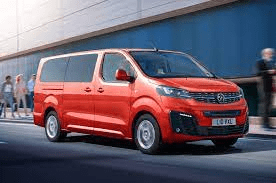
Turned out we were getting a Vauxhall Vivaro 8 seater mini bus. Leather seats, lots of options including a heads up display that incorporated the sat nav and looked really great.
Lets get some of the pluses out the way first.
It was very quiet and very smooth to drive.
Also if you drove it and utilised the breaking then it could regenerate energy and add to your mileage range.
Also the car can take up an hour to charge so I could leave it and go and get some exercise.
Unfortunately there were some big minuses though.
The range fully charged was 132 miles and a short drive from Sheffield into the Peak District up and down hills I found could wipe out half the range.
We had planned on a trip to Alton Towers or even the coast and realised this would mean at least several stops to recharge for a round trip. Each stop would have added an hour to the journey, assuming you can find a vacant charger when you arrive.
We ended up charging the van a couple of times a week and it was beginning to get expensive for the short trips we doing/able to do.
Charging was fun as the hire company hadn’t explained the charging unit had 2 caps one for slow charge and remove both for access to the fast charger.
Charging could take 45/60 minutes to get to 97% charge and a further 30 minutes to get to the full 100% (only tried) this once.
Also I encountered my first electric car owner rage as there was a car left in the charging bay and was fully charged and the owner was nowhere to be seen. I waited/wasted 30 minutes and still no show. You cannot remove the charger either.
Also we didn’t have a charger to the house so had to go to the local supermarket to use their fast charger, of which there was only one. There was a mobile app which told you when the charger was free and I used to pay from. The problem was that as soon as the fast charger was free there was a race to the supermarket and if you didn’t get there in time and a car was there then you had another hour to wait. I ended up going to the supermarket at 6.00 in the morning.
It was during one 6.00 charge where it struck me that an electric driverless car could be doing this and not me. It could anytime during the night have transported itself down to the supermarket and got itself charged.
Obviously the current standard charging arrangements wouldn’t work as you physically need to lift the charging cap on the side of the car and plug the charger in.
I came across the solution to this in our next hire car where I dropped my phone on a charging plate in a cubby hole behind the gearbox. So for a driverless car to charge by itself it needs to park above a similar outdoor charging plate that allows a car to be charged the same as my phone did. (see below update)
As I write this in 2022 my brief experience has highlighted to me that before I get one myself I would need the ability to charge the car at home as the current network of chargers is still limited. I was given a self-charging hybrid as replacement which was much better and did 70 miles to the gallon.
Also I would need to have a car that can cover a much further real mileage range than the minibus I had.
Obviously when driverless cars take off if they could go off and charge the car for you then this would be a real boon for people who live in say cities on streets where you can’t charge a car from and a supermarket charger would be the only solution.
Also the driverless technology might be a drain on the cars power and reduce its range which would need to be factored in.
Update – 2 Sept 2022
Electric cars – they’re the future, right?
There’s one big problem – recharging the batteries. Move over road rage – it’s range anxiety that’s taking over. The fear of not finding somewhere to recharge is a huge barrier for people. Let’s face it, no one wants to be half-way through a road trip with nowhere to plug in.
This could all change, however, thanks to a road that uses Dynamic Wireless Power Transfer (DWPT) technology to charge vehicles on the move.
The system, developed by automotive company, Stellantis, and dubbed ‘the Arena of the Future’ is composed of aluminium coils that lie under the asphalt and charge the vehicles travelling on the road without affecting drivers’ security. Aluminium is cheaper to source and more sustainable than the copper typically used in electronics.
Using the latest Fiat 500 to trial the technology, vehicles can travel at average highway speeds without wasting energy or needing to stop.
 Driverless Cars will never take off