I received an email titled “Famous cars” that included pictures of the original Batmobile, Addams Family hearse and Del Boys yellow Reliant 3 wheeler van (a driverless cars computer might keep warning their owners that they are missing a wheel)
I am lucky that if I go out for a lunchtime walk along the road near where I work there will always be some type of exotic car, Ferrari, Lamborghini, Aston Martin… either driving past or parked up, normally on double yellow lines.
On my work desk there is a toy red Ferrari F40, Bugatti Type 59 and a mouse mat with a picture of a red Mini Cooper on it.
If driverless cars take over will there still be the passion for cars and will people still want to have toy versions of driverless cars for them to dream about.
Looking at driverless car’s involved with testing firms are using vehicles currently on sale to the public. Although there was that odd-looking Google driverless car.
When driverless cars do finally take off and go on sale to the public are we expecting any major changes to the cars that are currently on sale and the roads today?
Will I still be able to gawp at illegally parked exotic cars on my lunchtime walks?
I must admit I don’t see the cars being any different to what they are today externally although they may be different internally.
I can still see a driver section at the front with a windscreen, dashboard, driver’s seat, steering wheel, pedals, and brakes.
I see the passenger section in the rear bring more geared up for relaxation as this is where the owners and passengers will be spending most of the journey.
The front section is where the driverless car will be doing all the work.
For a family everyday driverless car I reckon it could resemble a black London taxicab. The interior rear section will have seats facing each other and possibly a table in the middle to eat/work from. If people want to get into the driver’s seat, then they will need the car to stop and get out of the back and into the front seats.
An alternative family driverless car passenger area could look like a VW Transporter camper van (short wheelbase) that manages to not only fit in seats in the rear section but also fits in a kitchen area and cupboards. It could also come with a swivelling Captain Seat in the front that allows the owner to swivel the chair from facing passengers to being in front of the steering wheel should they want to take over driving the car at any time. Alternatively, for a family that do long distances in their driverless car the passenger area could be like a VW Transporter camper van (long wheelbase) that also includes a toilet and seats that fold into rock and roll beds. I expect various screens will be included for TV or gaming
Driverless cars could also be a boon for wheelchair users with bigger sized passenger areas and no longer the need for them to be get behind the steering wheel.
The driving area is interesting as for most of the time I would expect this to be empty of people with the driverless car doing the driving.
There may still be occasions when owners want to drive the car perhaps for nostalgia reasons or maybe people might want to elect for some sort of hybrid option where the driver and the driverless car can drive in harmony.
I mention a hybrid option as most drivers currently are not capable to take their cars to anywhere near the maximum limits of the car abilities.
Whilst sports cars can do 0 to 60 in 3 seconds and 4×4’s can climb mountains and reach the North Pole only a very small percentage of us actually have the skill or ability to ever hit these limits.
A hybrid option could be programmed into your existing car that allows you to sit in the driver’s seat and let the cars computer help you expand your driving abilities whilst in the safe knowledge that the driverless car safety features will kick in before it lets you crash it and kill yourself in the process. Unless of course there is a “You’re on your own- RIP” selectable option
The hybrid option might be viewed as something that owners of sport cars, convertibles and extreme 4×4’s might want to have installed in order to get the best driving experiences out of their cars.
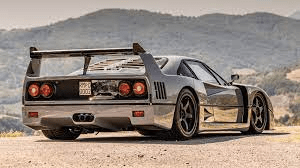
For example, an inexperienced Ferrari car owner might install a hybrid option into their Ferrari, sacrilege I hear you cry, but bear with me. Say they could install a hybrid “STIG” driver mode option that sets the Ferrari up as the designers in Maranello intended and allows the car to be driven with all the Stig’s driving skills.
The Ferrari owner after selecting “STIG” mode could have various options. The hybrid option could take the Ferrari and its owner to its max without any input from the owner at all, bit like a white-knuckle fairground ride.
Another option could allow the owner to take over full controls of the Ferrari and try and drive it to its max. The driverless car’s computer system would do a monitoring job and only kick in to stop any fatal accidents to it and the owner.
Alternatively, the driverless car could work with the owner by either voice commands or by making subtle adjustments to the steering wheel/brakes enabling the owner to improve their driving skills and get more out of the Ferrari’s driving experience for themselves rather than the driverless version getting all the fun.
There used to be reports of Stevie Wonder driving a car on the roads in America. The hybrid option might also enable visually impaired drivers who still want the experience and thrills of being behind the wheel of a car.
A special programme would enable visually impaired drivers to drive in the safe knowledge that their driverless car system will be giving them all the support and guidance they need. It will importantly also be trying to ensure that they don’t have an accident. I still expect though that people will do a double take when seeing Stevie Wonder getting out of the driver seat.
So, what about other forms of transport?
There are already driverless buses that are in use across several countries.
Driverless taxis will very shortly be available on a road near you as well.
Driverless vans would appear to be the next big step. These would enable larger goods to be delivered anywhere, at any time of the day, to meet the growing needs of the on-line demands of consumers and manufacturers.
There is a lot of work being done in countries like America to deliver driverless lorries/trucks. These will alleviate worldwide driver shortages and increase the amount of goods that can be shipped/delivered as driverless lorries/trucks could work 24/7. The lorries/trucks will no longer be restricted to working around human working patterns, time preferences i.e., overnight supermarket deliveries or the impacts of being away from home for long times that affect the long-distance lorry drivers. Crossing country/state lines driverless lorries/trucks though will need extra thought as to how they can abide by any new rules/restrictions/languages.
Lastly driverless motorcycles which I believe will be too difficult to build and possibly pointless. I can’t see the need for them as they will always need someone still sitting on them if for no other reason than to stop them falling over at traffic lights.
Driverless motorcycles will of course be safe and may even eliminate human’s current desire to take their lives in their own hands whenever they get on one for a ride. These extra safety features unfortunately might well alienate most potential motorcycle buyers!
I am sure though someone will still find a niche but very small market for a driverless motorcycle. Perhaps a hybrid option as mentioned above might be a compromise?
There is a temple in Jodhpur in India where motorbikes are worshipped so it would be interested if owners will also go there to say prayers for their driverless motorbike should they ever take off in India.
 Driverless Cars will never take off